Life is about rhythm. We vibrate, our hearts are pumping blood, we are a rhythm machine. That’s what we are.
– Mickey Hart
Human life happens in rhythms. The Earth’s revolution defines years, its axial tilt defines seasons, and its rotation defines days. Biological processes also run on repeatable patterns. These cycles do not remove change. They give people shared reference points for noticing change and correcting course.
Drift occurs when small deviations go uncorrected. In physics, entropy describes the statistical tendency toward disorder in the absence of sustained input. Organizations experience a comparable effect when feedback and maintenance are inconsistent. Without recurring inspection, work accumulates in queues, decisions are deferred, and outdated assumptions remain in circulation. Allowing unmanaged systemic change leads to entropy.
Software organizations operate under the same constraint. Work arrives unevenly, dependencies shift, and new information changes priorities. Without deliberate cadence for planning and review, coordination becomes ad hoc, feedback cycles lengthen, and decisions wait longer than intended.
Benefits of Cadence
When planning and review happen at random times, work sits longer than expected. Sometimes it waits days or even weeks before anyone looks at it. That delay makes delivery unpredictable and allows defects or misunderstandings to remain undetected. A regular cadence limits how long items can go without attention, which reduces rework and improves learning speed.
Cadence lowers coordination costs because people do not have to keep rescheduling alignment. When planning and review happen at known times, teams bring their questions, dependencies, and conflicts to the same conversation. Fewer side meetings are needed. Without fixed checkpoints, the same coordination work happens in fragments across emails, chat threads, and ad hoc calls.
When there is a set time to make decisions, fewer changes interrupt the middle of the work. Teams know when priorities will be revisited, so not every new idea becomes an immediate disruption. Work stays focused between checkpoints.
Cadence reduces friction through repeated practice. When the same events happen regularly, people get better at running them. They know what to bring and what decisions need to be made. The meeting takes less effort each time.
Improvement needs a reserved slot. When retrospectives are scheduled, problems are discussed and actions are chosen. When they are not, the same issues repeat because no time is set aside to address them.
Flow keeps tasks moving forward. Cadence makes sure someone stops regularly to check direction and adjust. If either is missing, problems build up.
Scrum is not Training Wheels for Agile
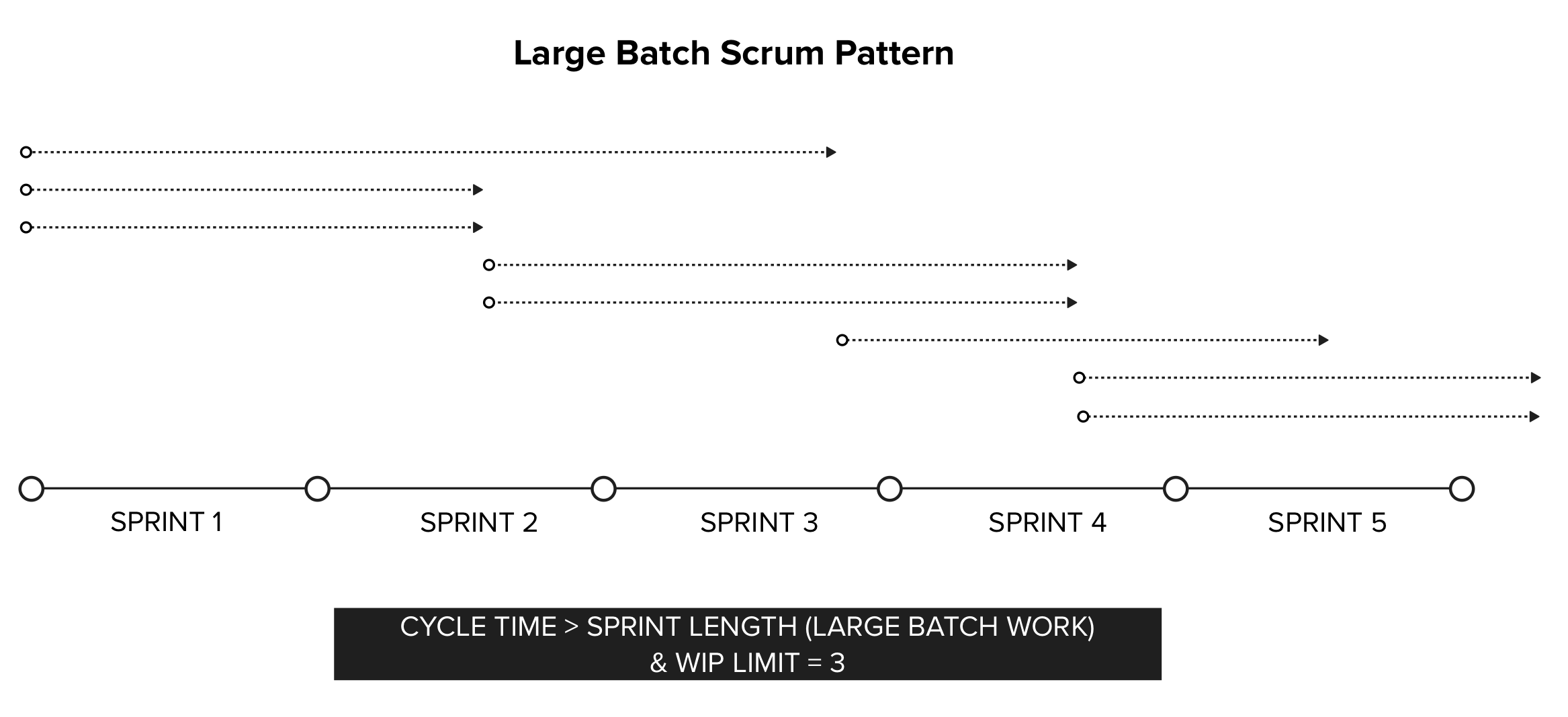
In organizations where Scrum is layered onto an existing phased-gate or project-led system, the underlying operating model does not change. Large batch work continues. Status reporting remains. Scrum events are added without removing existing controls. Teams then experience more meetings, more interruptions, and little reduction in cycle time. Scrum feels heavier because it has been overlaid, not adopted.
In these systems, work often takes longer than a Sprint to complete. Items stay open for weeks or months. Because they remain unfinished for so long, they are more likely to be interrupted or reprioritized. Teams often conclude that Scrum does not work in their environment. They see more meetings but no reduction in cycle time. Instead of changing how work is structured, they look for ways to remove the meetings.
Some teams respond by dropping sprints and regular reviews. They switch to Kanban and describe the change as moving to pure flow. They assume cadence is no longer needed.
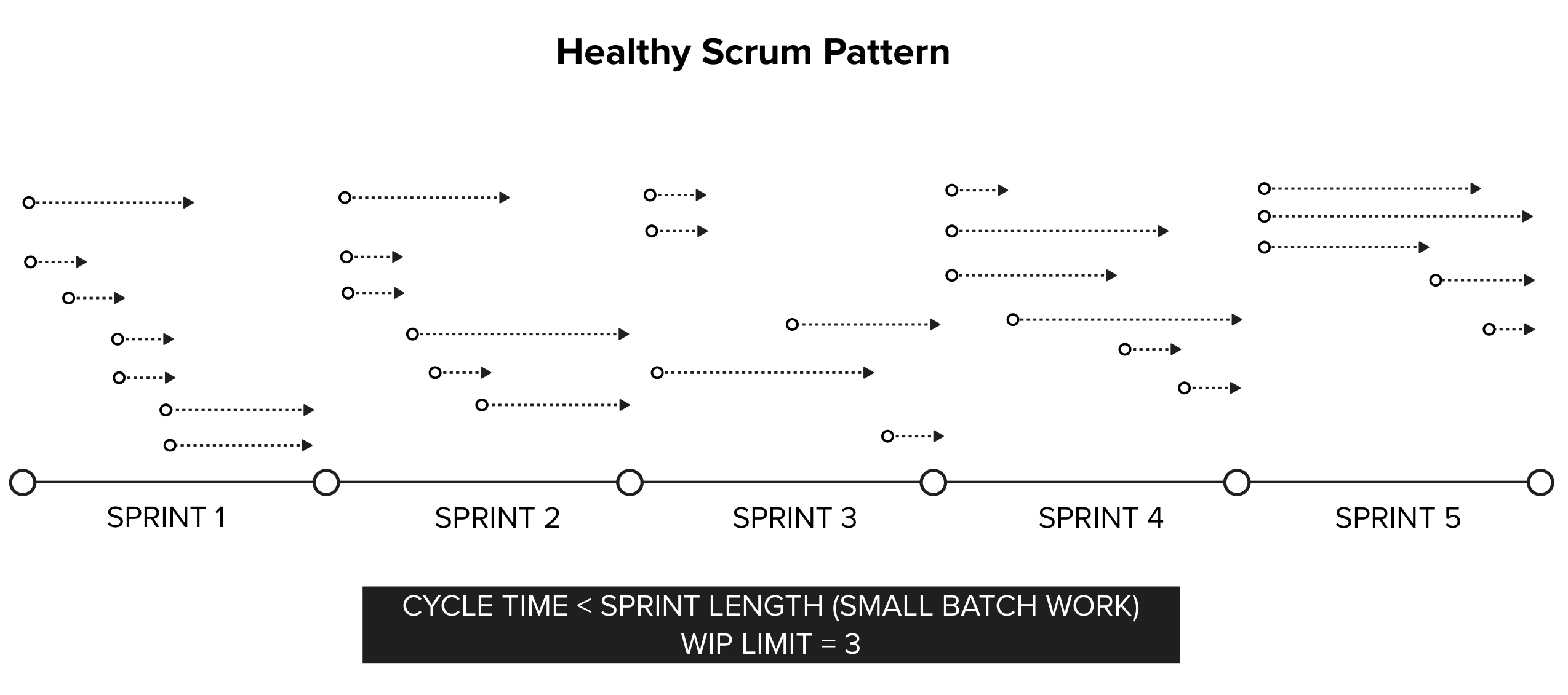
This conclusion comes from misunderstanding how Scrum is meant to work. When Scrum is layered onto an unchanged system, it adds meetings without reducing cycle time. When the structure changes, the same events can support flow.
Scrum is not something teams are meant to outgrow. It introduces constraints that change how work flows through the system. Batch sizes are reduced so that work completes sooner. Limits on work in progress prevent overload from spreading across the team. Reviews and retrospectives happen on a schedule so feedback and improvement do not depend on spare time. These practices remain necessary even as teams gain experience.
Scrum uses more than one cadence. The product goal sets direction. The Sprint sets a regular point to review progress and adjust plans. Planning, review, and retrospective create set times to improve the work and the process. The Daily Scrum keeps problems from sitting unnoticed for long.
xP reduces the time between action and feedback by reviewing work as it is created. Kanban reduces blind spots by showing how much work is in progress and where it is slowing down.
When these elements operate together, cadence exists at nested levels. Feedback becomes multi layered rather than episodic.When these practices are used together, teams do not wait for one big review to learn. Problems are caught during coding, during daily coordination, and during Sprint review. Feedback happens often instead of occasionally.
In Kanban, cadence appears in replenishment meetings, delivery reviews, and retrospectives. These events provide scheduled opportunities to adjust priorities and address flow problems. The structure differs, but regular inspection is still present.
When teams remove Scrum events but keep large batches and long-lived work, variability remains in the system. Delays and interruptions continue, even if the meetings disappear. Removing cadence is simpler than changing how work is structured.
Cadence is a Core Principle
Teams cannot control time, but they can control when they stop to review and adjust. Cadence sets those moments. It makes inspection predictable instead of optional.
Cadence does not disappear as teams mature. As work spreads across more people and teams, alignment becomes harder. Regular review points become more important, not less.
When review happens at more than one level, problems are found sooner and direction is corrected more often. Without those review points, misalignment builds over time.
Cadence supports flow by making sure work is checked and adjusted on a schedule.