
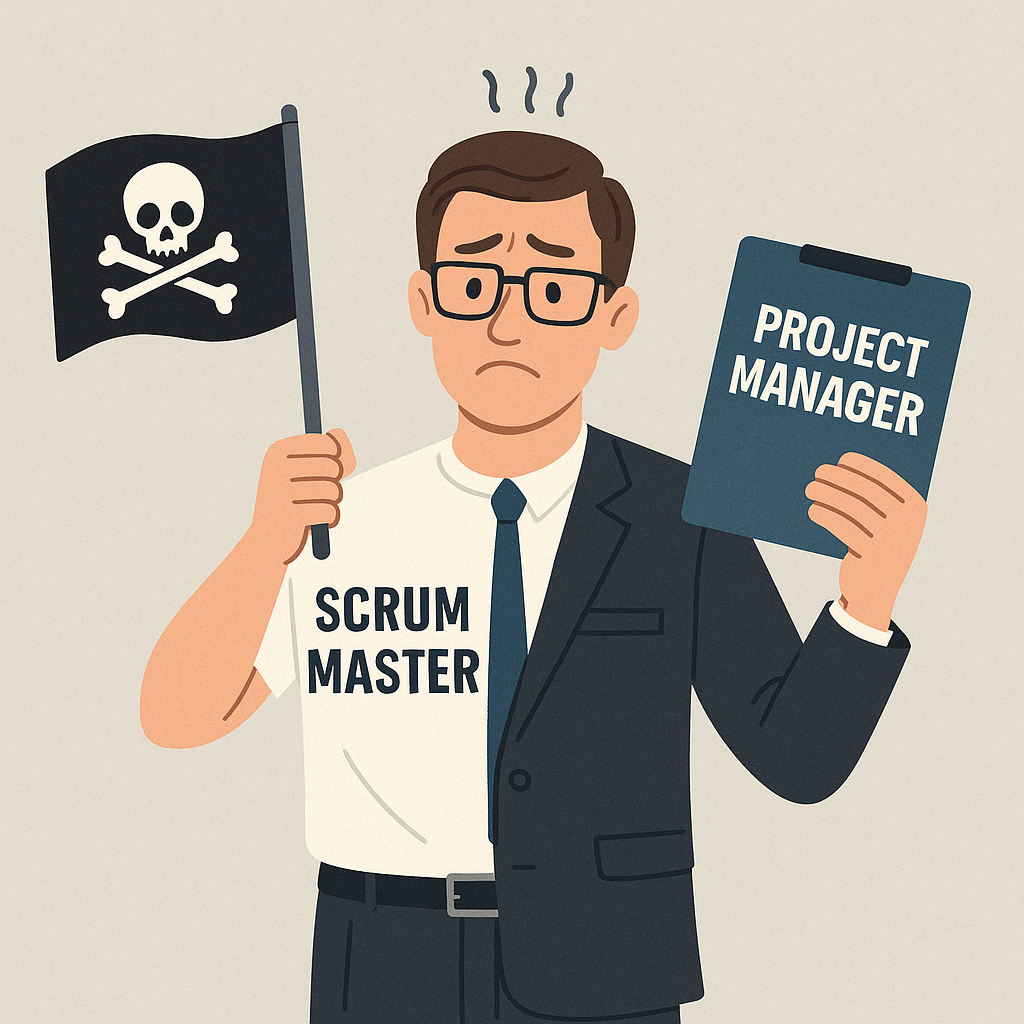
A Scrum Master is not an “Agile Project Manager.”
This may come as a surprise to many former project managers now serving in Scrum roles, but there is almost no overlap between the accountabilities of a true Scrum Master and a traditional project manager. These roles were designed for different purposes. They demand different skills. And they can even demand different personalities.
Over the past decade, however, most Agile transformations in large corporations have skipped over this reality. Rather than rethink roles, they simply rebranded their project managers as Scrum Masters. The result? An industry standard that looks nothing like the description of a Scrum Master found in the Scrum Guide.
The Venn Diagram Nobody Drew
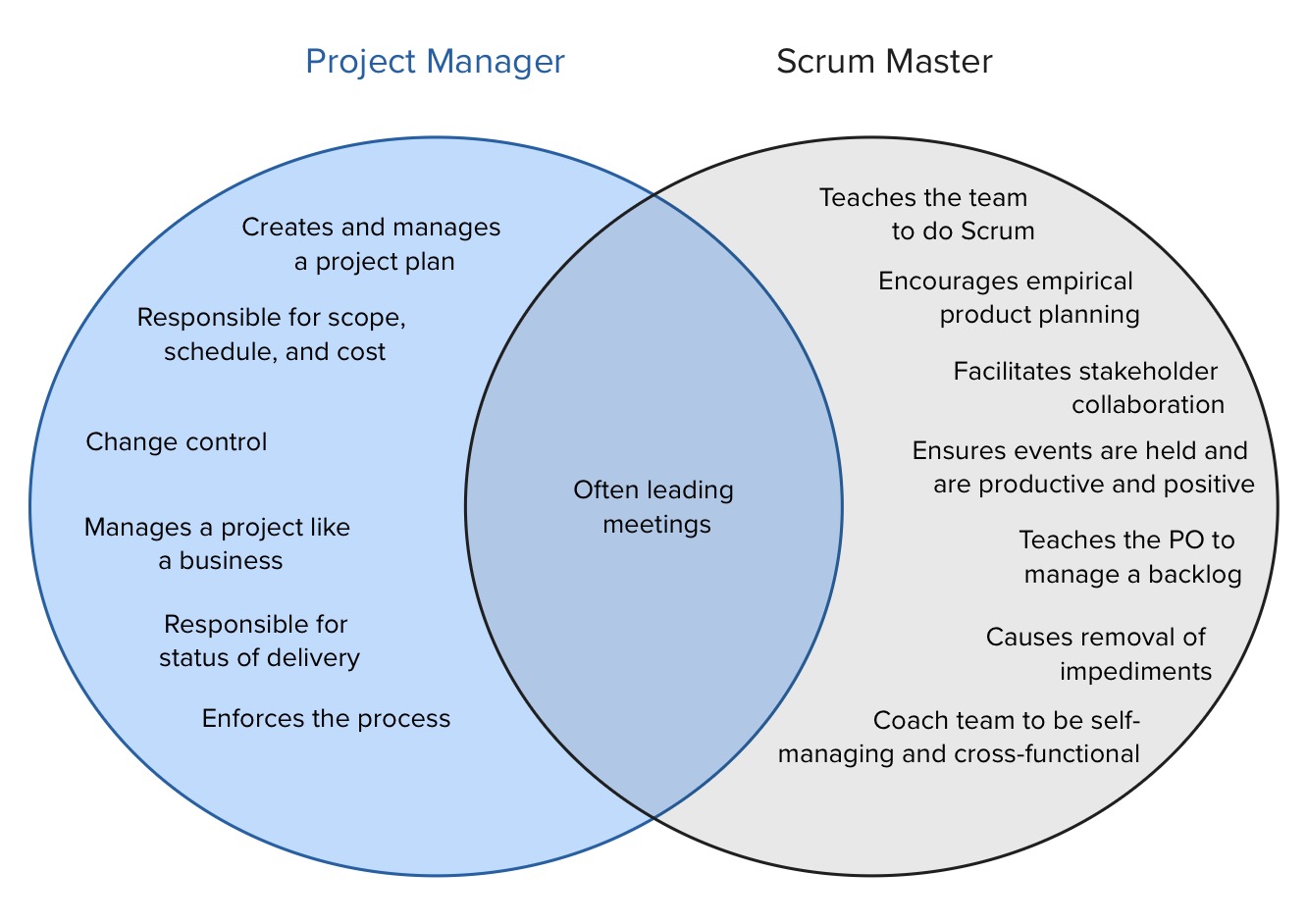
A project manager is like a trail boss on a cattle drive who is responsible for driving the herd from start to finish. Their job is to:
- Coordinate communication among team members
- Document and manage scope, schedule, and cost
- Hold people accountable to deadlines and commitments
- Prevent changes that threaten success (defined as delivering on the original plan)
- Deliver regular status reports to stakeholders
- Own the project’s success or failure
The project manager is a peer leader, not a line manager. They operate through influence, reporting, escalation, and meetings. If the project fails, they are the one held responsible.
The scrum master is not a manager of people or a deliverer of plans. The SM is:
- A coach, helping the team understand and apply Scrum
- A facilitator of change, questioning and challenging rules and practices
- A guide, introducing tools and methods from Scrum, Lean, Kanban, XP, and beyond teaching the team to work in small increments and adapt as they learn
Scrum Masters do not assign work, control schedules, or make promises to stakeholders. They help teams own their process, inspect outcomes, and improve continuously.
Scrum Master Theater
In most corporate environments, both roles, project manager and Scrum Master, are misunderstood. That misunderstanding creates role confusion and performative behavior.
Scrum Masters working in environments where Scrum is misunderstood are often asked to:
- Assign work
- Track task completion
- Host all meetings
- Maintain issue logs
- Solve every team problem
- Deliver project reports
In other words, they are asked to act like project managers. Why does this happen?
- Many SMs are former PMs who continue to behave as they always have.
- Leadership still expects PM behavior and measures success accordingly.
- Sometimes the SM ends up as a glorified Jira admin.
Ironically, project managers face similar dysfunction. In many organizations, they are not empowered to manage their projects, but that’s a story for another day.
Becoming a Scrum Master 🏴☠️
If you are a project manager hoping to become a true Scrum Master, the first step is understanding the difference in purpose. Look again at the Agile Manifesto:
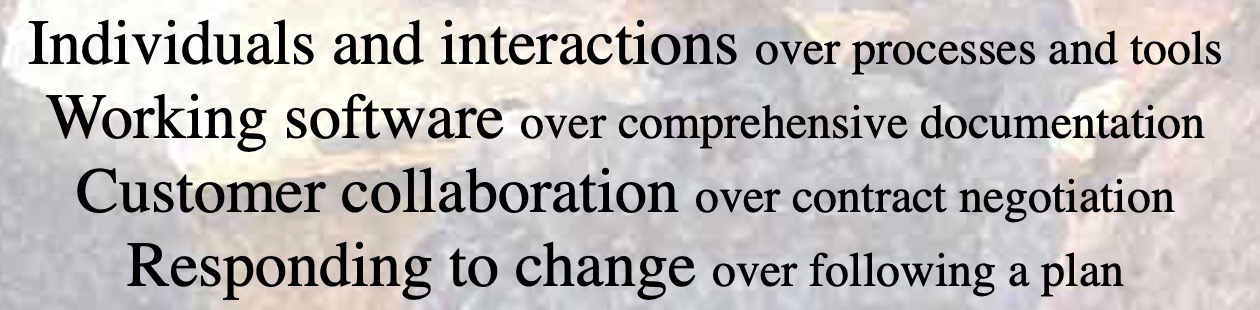
Project managers are usually responsible for the items on the right:
👮🏻♂️ Enforcing a process
👮🏻♂️ Enforcing use of standard tools
👮🏻♂️ Documenting everything
👮🏻♂️ Contract negotiation through obtaining sign off on plans, designs, etc
👮🏻♂️ Preventing change or at least limiting it
👮🏻♂️ Success is measured by things happening according to plan
Scrum Masters work to realize the values on the left:
🏴☠️ Individuals and interactions working together and having conversations to improve transparency
🏴☠️ Customer collaboration through establishing fast feedback by exposing work to stakeholders frequently
🏴☠️ Responding to change and even triggering change intentionally to obtain the benefits of continuous improvement
🏴☠️ Minimizing the amount of documentation created
🏴☠️ Minimizing the amount of contractual talk and negotiation by ensuring everyone is working together as a team rather than in a customer/servant relationship
🏴☠️ Success is measured by completion of working software and obtaining feedback then adjusting
In this sense, the project manager is often the enforcer of the status quo. The Scrum Master is the rebel leading a protest.
Real Transformation
Becoming a Scrum Master takes more than a two-day class and a badge on LinkedIn. It requires letting go of deeply held beliefs about how documents create alignment, plans guarantee delivery, and enforcing compliance leads to success. Scrum Masters view these as often ineffective and sometimes harmful.
But change is possible. I know incredible Scrum Masters and Agile Coaches who started as hard-core project managers… ahem. But they did the work. They studied. They shifted their mindset. They stopped escalating and started encouraging. They moved from managing work to enabling learning.
There are plenty of articles on this site to help with that journey.
Just know: once you make the leap, the hard part is not understanding the role. It is convincing your organization to let you do it. Most will think you are doing it wrong. They will ask you to manage the project. They will expect status reports. They will want you to act like a PM with a pirate hat.
But that conflict is the job. Scrum Masters are accountable for teaching the organization what a Scrum Master really does and why it matters.